
The Villages® Newer Areas vs. Established Areas: How to Choose the Right Fit
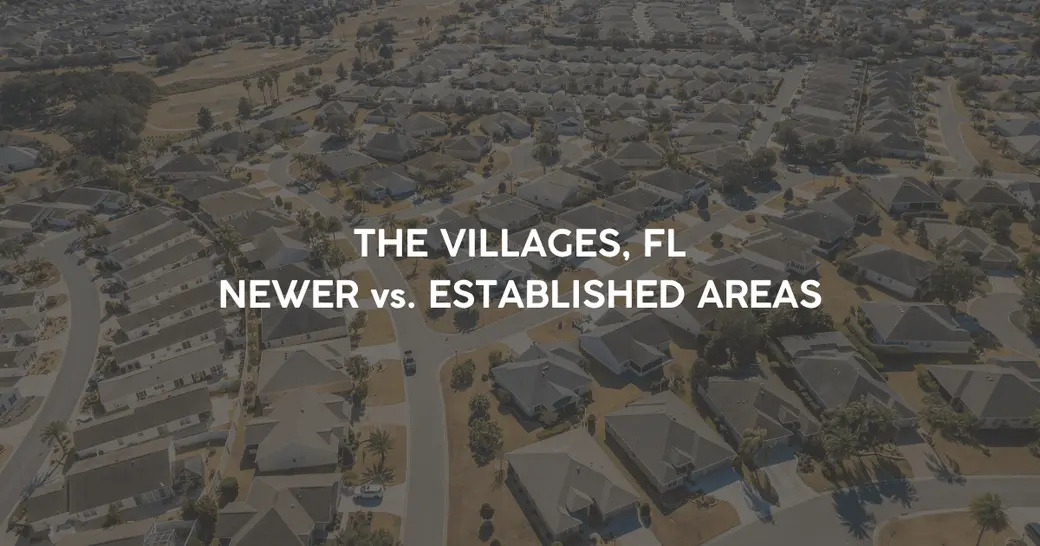
The Villages® Newer Areas vs. Established Areas: How to Choose the Right Fit
By Brian Williams :: Realtor®
LPT Realty, LLC
One of the biggest questions buyers ask when they start looking in The Villages® is this:
“Should we buy in one of the newer areas or one of the more established areas?”
It is a great question.
But the answer is not the same for every buyer.
Some people love the idea of newer homes, newer finishes, newer streets, and being part of a growing area.
Other buyers love mature landscaping, established neighborhoods, shorter drives to familiar shopping and dining, and a more settled feel.
Neither choice is automatically better.
The right choice depends on how you want to live.
So before you decide where to buy, here are the biggest things to compare.
Start With Lifestyle, Not Just Age
A lot of buyers start by asking:
“Is the home newer?”
That matters.
But it should not be the only question.
A better question is:
“Does this area fit my daily routine?”
Because in The Villages®, location is about more than a map.
It affects:
Where you go for dinner.
Which town square you use most.
How often you use your golf cart.
Where you shop.
Where you play golf.
Where your friends live.
How quiet or active your street feels.
How long it takes to get to medical appointments.
A newer home in the wrong location may not feel better than an older home in the right location.
And an established home with the wrong layout or expensive upcoming maintenance may not be the better deal either.
You have to compare the whole picture.
Why Buyers Like Newer Areas
Newer areas in The Villages® can be very appealing.
For many buyers, the attraction is simple:
They want newer.
Newer homes may offer more current floor plans, newer mechanical systems, newer roofs, newer appliances, and more modern finishes.
That can give buyers peace of mind.
It may also mean fewer immediate updates after closing.
For buyers who do not want projects, that can be a big advantage.
A newer area may also appeal to buyers who like the idea of being part of a growing section of the community.
Many people enjoy moving into an area where other people are also new.
It can feel easier to meet people when neighbors are settling in at the same time.
Things to Watch in Newer Areas
Newer does not automatically mean perfect.
You still need to ask good questions.
A newer home may have fewer age-related concerns, but you still need to think about:
Construction activity nearby.
Distance to the places you plan to use most.
How developed the surrounding area feels.
Golf cart routes.
Shopping and dining convenience.
Future resale appeal.
Lot privacy.
Garage space.
Bond-related costs, if applicable.
Some buyers love being in a newer area.
Others arrive and realize the daily routine is not what they expected.
That is why you should not just compare the house.
You should compare the lifestyle.
Why Buyers Like Established Areas
Established areas can also be very attractive.
Many buyers love the mature feel.
They like the landscaping.
They like streets that feel settled.
They like being closer to familiar shopping, dining, medical, recreation, and town square routines.
They may also like that the area has a longer resale history.
You can often get a clearer feel for how the neighborhood has aged, how homes have been maintained, and what buyers value there.
For some buyers, an established area simply feels more comfortable.
It feels finished.
It feels known.
It feels easier to picture daily life.
Things to Watch in Established Areas
Established areas can be wonderful.
But older homes require a closer look.
Before buying, you need to check:
Roof age.
HVAC age.
Water heater age.
Windows and sliders.
Flooring.
Appliances.
Kitchen and bath updates.
Lanai condition.
Driveway and exterior condition.
Garage storage and layout.
An established home may have a great location but need updates soon.
That does not mean you should avoid it.
It means you need to price it correctly and understand what you may spend after closing.
A lower list price does not always mean lower total cost.
Compare the Daily Routine
This is where buyers should slow down.
Imagine a normal week.
Where will you go?
How often will you go there?
How will you get there?
Will you drive?
Will you take the golf cart?
Will you meet friends at a town square?
Will you play golf often?
Will you go to the pool?
Will you use recreation centers?
Will you be going to medical appointments?
Will you want quick access to restaurants and shopping?
A home may look great online, but the routine may not fit.
That is especially important for buyers moving from out of state.
You are not just buying a house.
You are buying a way of life.
Compare Golf Cart Convenience
The golf cart lifestyle is one of the biggest reasons people love The Villages®.
But golf cart convenience can vary.
Before choosing between newer and established areas, ask:
How far is the ride to the places I will use most?
Does the route feel comfortable?
Will I use the cart daily or occasionally?
Will the route feel good in summer heat?
Will I want to make this ride at night?
Is the garage setup good for a cart?
Some buyers want everything close by golf cart.
Others do not mind driving more.
Neither is wrong.
But you need to know which buyer you are.
Compare Maintenance and Updates
This is one of the clearest differences.
A newer home may have fewer immediate maintenance concerns.
An established home may have updates already completed — or may need them soon.
Look closely at the big-ticket items:
Roof.
HVAC.
Water heater.
Windows.
Appliances.
Flooring.
Kitchen.
Bathrooms.
Exterior paint or finish.
Lanai or birdcage.
A home with older systems may still be a great buy if the price reflects it.
A newer home may still need upgrades if the finishes are builder-basic or not your style.
The key is comparing the real cost after closing.
Compare Lot and Privacy
This is huge.
Do not choose only based on home age.
Look at the lot.
Ask:
Is there privacy?
Are the homes close behind each other?
Is the lanai usable?
Is there road noise?
Is there golf cart traffic?
Is the landscaping mature?
Will I need to add privacy after closing?
A newer home with little privacy may not feel as good as an older home with a beautiful private lanai.
An established home with mature landscaping may feel wonderful.
But it may also require more maintenance.
Again, there is no automatic winner.
There is only the right fit for you.
Compare Garage Space
Garage space is one of the most underrated parts of buying in The Villages®.
Before choosing an area or home, think about what you need to store.
Cars.
Golf cart.
Golf clubs.
Bikes.
Tools.
Holiday decorations.
Storage bins.
Hobby supplies.
Outdoor gear.
Newer homes may have garage layouts that work well for today’s buyers.
Established homes may have additions, expanded garages, or creative storage.
But you need to see it in person.
Do not assume everything will fit.
Compare Monthly Cost
The list price is only part of the decision.
You should also compare the monthly cost.
That may include:
Mortgage payment, if financing.
Taxes.
Insurance.
Utilities.
Amenity-related costs.
Bond-related costs, if applicable.
Lawn care.
Pest control.
Maintenance.
Future updates.
A newer home may have different ownership costs than an established home.
An older home may be less expensive up front but may require more updates.
The better question is not:
“Which one is cheaper?”
The better question is:
“Which one gives me the best overall fit for the money?”
Compare Resale Appeal
Even if you plan to stay long term, resale still matters.
Future buyers will care about many of the same things you care about:
Location.
Garage space.
Roof and HVAC age.
Floor plan.
Kitchen and bath updates.
Outdoor privacy.
Golf cart access.
Monthly cost.
Neighborhood feel.
A newer home may have strong appeal because of age and layout.
An established home may have strong appeal because of location and mature setting.
The best purchase is the one that fits your life now and still makes sense later.
My Advice
Do not choose newer just because it is newer.
Do not choose established just because it feels familiar.
Compare both honestly.
Look at the home.
Look at the location.
Look at the route.
Look at the garage.
Look at the lanai.
Look at the maintenance.
Look at the monthly cost.
Then ask:
“Which one fits the way we actually want to live?”
That is the question that matters most.
Thinking About Buying in The Villages®?
Text me NEWER VS ESTABLISHED and I’ll help you compare homes by lifestyle, location, maintenance, golf cart access, garage space, privacy, and true monthly cost.
The right home is not always the newest home.
And it is not always the most established home.
It is the one that fits your life.
Brian Williams :: Realtor®
LPT Realty, LLC
Call/Text: (352) 978-1284
Email: bwsellsflorida@gmail.com
Website: www.bwsellsflorida.com
Categories
Recent Posts